Romanticism: What is it?
Legend of Sleepy Hollow, and Swing Low Sweet Chariot


Romanticism Recap
.To begin, it is important to understand this. Genre's are weird, mainly because a writer doesn't sit down and force himself or herself to conform to a set of defining rules. They don't say " I must kill off this character because this is a horror story, and it would go against the rules if I didn't kill everybody" . bwahahahaha!" No. An author writes what they want when they want how they want, and that's what makes them good writers... most of the time, but we need to recognize the conventions that usually seem to be present in all writings similar in time period. Good writer's don't write to make money... well... maybe they do, but they also write to make change, they may write to express themselves, they may even write to relieve themselves of those irritating voices pounding in their brain, but those manuscripts aren't often published, except for that Charles Dickens one that was literally called "Madman's Manuscript", but let's not talk about that. The point is that all writer's are sincerely affected by the changing world around them. Whether they consciously wrote a dystopia novel to express skepticism, or if it was born form their unconscious doubt raised by current events on some level all good writer's reflect their personal take on the way that the world looks to them. Did you ever find it odd that in rough estimate 99.9% of all popular books have a solid element of mystery, confusion, or chaos. There's usually a secret, and the hero, or heroine is trying to find it out, or of course there's the old stand-by They're planning to take down the secretly evil government with their evil secrets and their chaotic awfulness rebel style, with some hot, and emotionally scarred guy named 4.
.
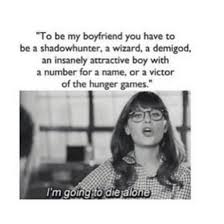 oh, wait I'm getting too specific aren't I? alright, let's go with Gale... What do you mean that's already taken? My point being that one is obviously hostile towards "the man". Because current events, and our sudden enlaunchment (Is that a word?) (yes, I did just make up a word. If Shakespeare can do it I don't see why I can't) into the world of technology has made us as a race, and a country uneasy. Books are like holding up a squeaky clean window to the world; the image is blurred, maybe swirled around a little bit, there may even be a little rainbow action going on, but if you look at it just the right way it is as clear as a text book. The same go for genre-but-not-quite-a-genre genre's like romanticism. Romanticism breaks of into several different branches, because romanticism isn't just some way of writing that was conformed to in a certain time period. It was actually and literally the time period, and more importantly the authors. Romanticism came from a shift in the way people look at things. I personally believe that these shifts date our progress as a race, and document our hiccups along the way. Our shifts from puritanical witch burnings, and the belief that if your house burns down oh, well I guess that's what god wanted I'm sure that candle I left burning by my secret liquor stash had nothing to do with it, to a negative reflection upon those things like in The Scarlet Letter , prove our progress... its also an indication when we take a historical name, add "ical", and turn it into a word that, to most, basically means crazy.
 In The Scarlet Letter, Nathaniel Hawthorne shows his romanticism colors by writing about his ancestors, the puritanical puritans, as ,well, you know, puritanical. The story contains emotions, supernatural elements, and plenty of nature which shows development in not only the acquisition of such ideas, but the clearer expression of them. Heck, in puritan times their idea of romantic was "lets be good so we can go to heaven together"... Moving onto mentioning "The Devil and Tom Walker", I would like to point out that, being romantics, both stories explore the good, and evil of man. They analyze, and weigh the puritan beliefs in the power of the devil, or evil, and the powers of god. The Scarlet Letter explores Hester, and Dimmsdale's sin, and their path to redemption. "The Devil, and Tom Walker" explores Satans powers of persuasion, and their effect of humans, and his eminent presence. Well, I'm glad I got that done...
The Legend of Sleepy Hollow
"The Legend of Sleepy Hollow" is the story of a school teacher who loves scary stories. He falls in love with a girl in rivalry with a thug, and then magically one night is chased off the road and then apparently far far away by an infamous specter known as the headless horseman. I am supposed to be describing how this story captures the imagination of the reader, and it really does, but I would also have to say that Disney, and Jr. High "jacket time" pretty much ruined it for me. First of all, my parents, by the grace of god (it's a saying; not a pushy "hey, look I'm a Christian" ), were probably the most patient parents anyone could ever have. They probably bought every animated Disney movie ever in existence, and watched it with me at least 50 times over,
 so while reading this story instead of imagining the story itself, I saw bright flashes of oddly clad men swooning over an oddly clad woman, and for some odd reason I faintly remember a scene with apples, and a door split into two doors, a top, and bottom one, and a really thin guy getting hit by one...maybe, and THEN in jr. high we read a play inside some random magazine that was the legend of sleepy hollow, I get the feeling that both were incredibly off. The story has good use of words in the imagery department. In the opening sentence it says, "In the bosom of one of those spacious coves which indent the eastern shore of the Hudson, at that broad expansion of the river denominated by the ancient Dutch navigators the Tappan Zee, and where they always prudently shortened sail and implored the protection of Saint Nicholas, there lies a small market town which is generally known by the name of Tarry Town." Yep, definitely do not remember that in either one. It uses beautiful words that engage the readers mind, and imagination in trying to picture it. The story also leaves off in a mysterious, and chuckling manner, after old Ichabod had fallen from his horse, and says, " They shook their heads, and came to the conclusion that Ichabod had been carried off by the Galloping Hessian. As he was a bachelor, and in nobody's debt, nobody troubled his head anymore about him. It is true, an old farmer who had been down to New York on a visit several years after brought home the intelligence that Ichabod Crane was still alive; that he had only changed his quarters to a distant part of the country, had kept school and studied law at the same time, had turned politician, and finally had been made a justice of the Ten Pound Court. Brom Bones too, who shortly after his rival's disappearance conducted the blooming Katrina to the altar, was observed to look exceedingly knowing whenever the story of Ichabod was related, and always burst into a hearty laugh at the mention of the pumpkin, which led some to suspect that he knew more about the matter than he chose to tell." This engages the reader's imagination by adding helpful little hints to lead the reader to form their own conclusion, but the correct one, and that is my answer to that.
well, I'm pretty well done here.
I will see you again, Kitty Softpaws!
. bwahahahaha!" No. An author writes what they want when they want how they want, and that's what makes them good writers... most of the time, but we need to recognize the conventions that usually seem to be present in all writings similar in time period. Good writer's don't write to make money... well... maybe they do, but they also write to make change, they may write to express themselves, they may even write to relieve themselves of those irritating voices pounding in their brain, but those manuscripts aren't often published, except for that Charles Dickens one that was literally called "Madman's Manuscript", but let's not talk about that. The point is that all writer's are sincerely affected by the changing world around them. Whether they consciously wrote a dystopia novel to express skepticism, or if it was born form their unconscious doubt raised by current events on some level all good writer's reflect their personal take on the way that the world looks to them. Did you ever find it odd that in rough estimate 99.9% of all popular books have a solid element of mystery, confusion, or chaos. There's usually a secret, and the hero, or heroine is trying to find it out, or of course there's the old stand-by They're planning to take down the secretly evil government with their evil secrets and their chaotic awfulness rebel style, with some hot, and emotionally scarred guy named 4..
In The Scarlet Letter, Nathaniel Hawthorne shows his romanticism colors by writing about his ancestors, the puritanical puritans, as ,well, you know, puritanical. The story contains emotions, supernatural elements, and plenty of nature which shows development in not only the acquisition of such ideas, but the clearer expression of them. Heck, in puritan times their idea of romantic was "lets be good so we can go to heaven together"... Moving onto mentioning "The Devil and Tom Walker", I would like to point out that, being romantics, both stories explore the good, and evil of man. They analyze, and weigh the puritan beliefs in the power of the devil, or evil, and the powers of god. The Scarlet Letter explores Hester, and Dimmsdale's sin, and their path to redemption. "The Devil, and Tom Walker" explores Satans powers of persuasion, and their effect of humans, and his eminent presence. Well, I'm glad I got that done..."The Legend of Sleepy Hollow" is the story of a school teacher who loves scary stories. He falls in love with a girl in rivalry with a thug, and then magically one night is chased off the road and then apparently far far away by an infamous specter known as the headless horseman. I am supposed to be describing how this story captures the imagination of the reader, and it really does, but I would also have to say that Disney, and Jr. High "jacket time" pretty much ruined it for me. First of all, my parents, by the grace of god (it's a saying; not a pushy "hey, look I'm a Christian" ), were probably the most patient parents anyone could ever have. They probably bought every animated Disney movie ever in existence, and watched it with me at least 50 times over,
well, I'm pretty well done here.
I will see you again, Kitty Softpaws!


